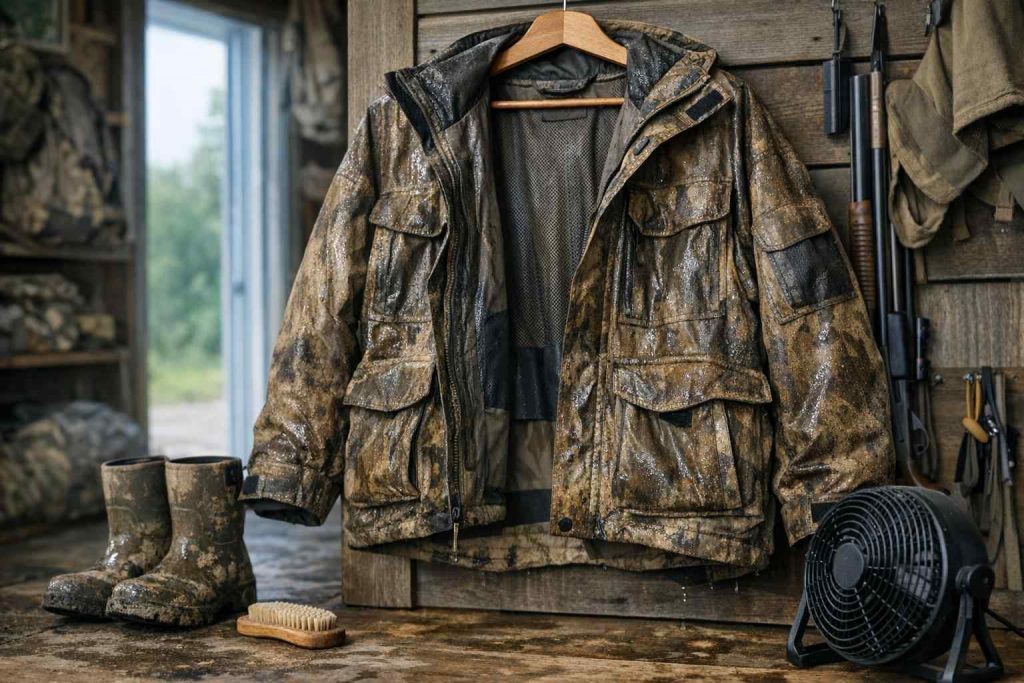
We always try to remember to clean up the clothing we wear for our hunting adventures. Most dirt and grime comes off easily with a soft brush but needs to be done before it dries and becomes harder to remove. Also, before you put your clothes away for storage, make sure to inspect them for any damage caused by the dirt and grime. Most cleaning up can be done in the field and is better to do as soon as possible.
Start with a field-side shakeout
Start to clean your hunting clothes in the field. If possible, give your boots, cuffs, knee areas, seat and different parts of the garment a good knock with a soft brush or towel to remove most of the big chunks of mud. Also, empty all the pockets of your garments as seeds, burrs and even stones can get stuck in zippers of hook-and-loop areas.
Empty all the pockets from your clothing. Remove all shells, calls, gloves, food, batteries, and cover. Be careful not to pull any grass seeds, burrs or small stones from the clothing's hook-and-loop fasteners. Also be careful not to spread any mud from the clothing to the rest of the vehicle or laundry area.
Saturated clothing should be separated from other articles as soon as possible and stored or allowed to dry separately from other gear. If necessary, clothing can be stored in a sealed pack or tub whilst traveling home but this must be opened up as soon as possible and the clothing allowed to dry out fully.
Rinse mud without abusing the fabric
If clothing is covered in mud and this dries to thick mud then it can be removed by brushing before washing. Very muddy items such as gaiters and boots can be cleaned with a gentle hose jet. Do not use high pressure near seams, pockets or other areas with delicate closures.
Refer to the care label for technical layers prior to washing them. Waterproof clothing has been treated with face paint, membranes, coatings, and seam tape, which can be damaged by harsh detergents and/or fabric softeners, and be ruined by bleach and excessive heat. Only use a cleaner on waterproof clothing as recommended by the manufacturer and as permitted by the care label.
Firstly, not all of your clothing will be washed in the same wash. For example, your base layers, fleeces, and insulated clothing will all be washed in different washes to your outer rain shells. Items with obvious mud or very strong field smells can even be washed separately from your normal clothing.
Dry the layers according to their construction
Air circulation is much more important than heat for drying clothes. Open up any pockets and turn clothing inside out to speed up drying. Do not hang clothing in a bunched up heap as this will prevent even drying of certain areas. Using a fan in the room is also helpful to speed up drying.
Keep waterproof and water repellent outer layers away from direct high heat. A warm car on a cold winter's day can seem like a good place to dry out your outer layers but avoid radiators, wood stoves and other sources of high heat. Garments made from synthetic insulating materials also need to be watched for damage from excessive heat.
Turn clothing with heavy insulation as you dry it. That means turn waistband, turn seat, turn knee and look for mud at cuff bottoms and boot tops. Empty all pockets including the ones in the sleeves to check for gloves,shell casings,snack packaging etc. Insulated clothing must be completely dry before storage. Be especially aware of compressed sections such as shoulder areas of down filled jackets or hips of insulated pants.
Boots – Let Them Dry Out. Yes, it is possible to clean your boots without getting them wet! Try to remove the insoles and clean the upper parts with warm water. Open up the boot for a while to let it dry. Do not dry leather or rubber boots with intense heat. Check the manufacturer's web site for the best way to care for the soles and uppers, for any special cleaning and waterproofing products and for storage advice.
Inspect for damage before putting anything away
While gear is still dirty and somewhat wet is the best time to find tears in fabric or loose stitching. Check out the following areas on pants: seats, knees, cuffs, zipper tracks, suspenders, snaps for belt loops. Look for pinholes in rain gear, peeling of seam tape, cracking of coatings and clogging of hook-and-loop closures.
Before you head off on your next trip, inspect your clothing for tears and look for wear on seams and patches. Make any necessary repairs to clothing, especially waterproof garments. Brush dirt from zippers and remove any fibers from closures, test out any snaps and test any belts before setting off.
Damp or wet clothing does not necessarily mean that the waterproof and/or breathable layer has failed. In many cases, damp or wet clothing is caused by condensation, worn water repellency, compression, or other means, and can be rectified by allowing the clothing to dry out slowly. Identifying the cause of any dampness or wetness is crucial to determining the best course of action for repair or retreatment of the affected clothing item.
Control odor without creating a new problem
Field clothing should smell of clean air. Avoid the temptation of strongly scented cleaners and be diligent to follow the recommended amount of cleaner to be used. Also ensure that all clothing is rinsed thoroughly to remove any residual cleaner. Do not add fragrance to your field clothing.
The smell in clothing stored between hunting trips most likely comes from clothes not being completely dried prior to storage, the boots and gloves being stored in the clothing, smelly blinds, and or storage areas that have been allows to become damp. Washing the removable pack liners and the boot trays and then letting the bags and the blinds be opened up and spread out will solve the smell problem. Any smelly clothing must be checked for moisture that has seeped into the seams, padding, and or even inside closed up pockets.
Do not allow any field clothing to come into contact with fuels, solvents, smoke or other household chemicals as they will penetrate clothing and cause unpleasant smells which are difficult to remove. Store clean clothing in a dry, well-ventilated area of your home or a shed. Do not store in plastic containers or under a damp cellar.
Store field layers so they are ready to use
Do not fold or store items such as insulated layers, waders and padded garments for long periods of time in a small space. Use wide hangers to store items such as heavier outerwear. Do not store items with suspenders, elastic cuffs or straps in a way that causes them to be pulled taut.
If you have clean outer layers, field attire, etc., store them separately from your muddy boots, used gloves, etc. & damp blinds. A large, breathable bag or a spacious open shelf would be suitable for clean outer layers; stored clothing should always be completely dry. Excluded from this category are waders, rain shells & similar articles which should be folded up & stored in sealed bins in order to protect them from dust, rodents, etc. as well as from foul field creatures (f/write separately).
Check for folds or other creases that could be trapping moisture to coated surfaces. Open zippers on clothing such as rain shells. Avoid sharp folds or creases in garments that will be flexed or stressed as they are stored and pulled out for subsequent hunting trips. Mark items that need repair with a simple note or tag, so they won't get left behind when the next hunting season starts.
On your next hunt, check your clothing for proper fit, working closures, water repellency, and general wear. Remember to clean any soil and plant material from your equipment before you move to another location, and adhere to any landowner restrictions as well as current official guidance on invasive species and habitat degradation. Remember, proper care of your gear won't make it last forever, but it will keep it from getting ruined in a muddy area on your next hunt.