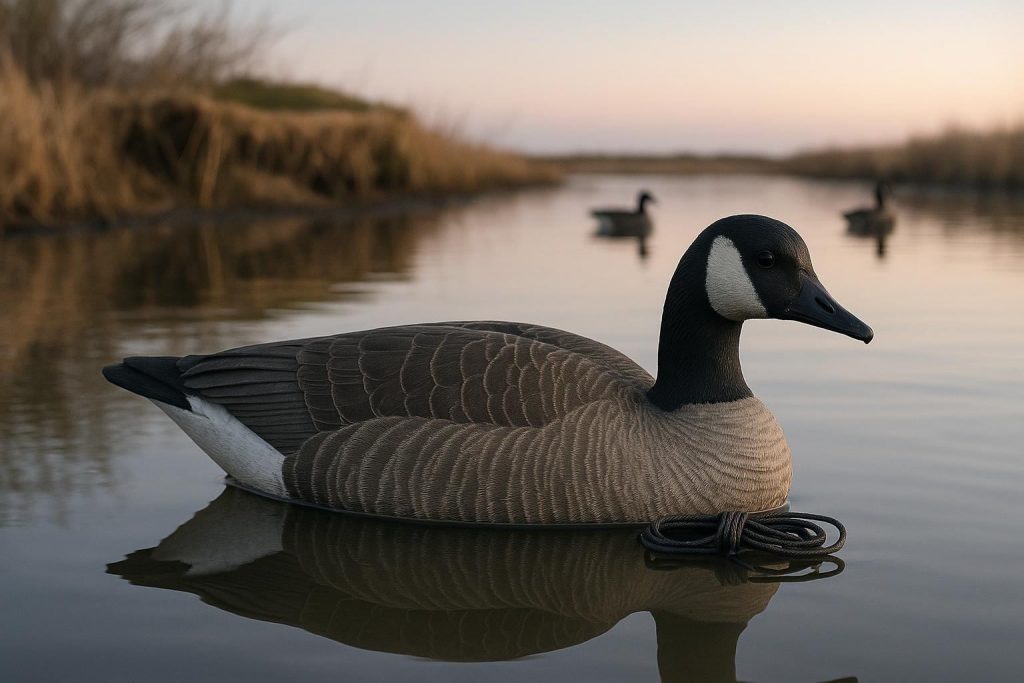
Optimizing Your Small-Water Goose Decoy Spread
When hunting geese in confined spaces, like ponds or narrow backwaters, a larger goose decoy spread is not always helpful. In fact a larger spread can cause problems. An overcrowded area may not keep geese away. Also force hunters into taking hurried shots at unsatisfactory targets. The goal is to build an inviting scene that allows selective shooting. To reach this goal I need an approach, an understanding of regulations and the discipline to avoid opportunities.
Assessing Your Hunting Environment
The type of water I work with greatly influences goose decoy setup. A spread designed for a reservoir might create problems in a small pond limiting clear landing zones and blocking shooting lines. Furthermore goose decoys could unintentionally guide approaching geese toward brush, roads, buildings, livestock or neighboring properties.
Before I unload gear I take stock of water, access points and where a downed goose might drift. I also check locations that could complicate retrieval due to vegetation, currents or property lines. The goal is to set up in a place where I can recover a goose without scrambling than trying to fill every spot.
Clearly Define the Landing Area
In a spread creating a landing pocket is crucial. I position it upwind or crosswind from my blind according to geeses flight path and my safe shooting angles. I also make sure nearby goose decoys are spaced well so they do not hinder landing from the direction.
The exact arrangement of goose decoys is less important than the difference between occupied areas and open water. A arranged cluster, a dispersed family units or two small groupings with space between them can effectively draw in geese. On a pond a select number of well-placed goose decoys often looks more natural than a crowded cluster.
If geese circle above but do not land I reassess the landing area. The landing area might need adjustment. I may want to clean up the setup for visibility and concealment instead of simply adding more goose decoys.
Concealment Matters
My hideout can easily undermine the effectiveness of goose decoy spread. A blind that stands out starkly against surroundings can be a drawback no matter how strategically I place goose decoys. I aim to blend my setup with existing cover while avoiding any disturbances to the surrounding environment.
Organizing gear is essential; I make sure loose straps and colored containers do not unravel my concealment. The goal is stability and quietness not invisibility. If my cover is too poor I might. Skip the hunt entirely because poor positions can lead to rushed shots and missed opportunities.
Stay Informed on Regulations
It is critical to know the legalities surrounding my hunt because regulations can vary widely. I understand the rules for hunting geese in my area including season dates, required permits, tagging and reporting protocols. These rules can change so I must reference guidelines of relying on outdated information from last season or hearsay.
I always consult the regulations for my hunting location and date. I ensure I am familiar with all permits and identification requirements. If anything is unclear I reach out to my wildlife agency before heading out.
Adhering to requirements is the start; a technically legal shot can still lead to poor results if the shot is not safe or if retrieval is difficult.
Establish a Harvest Limit
Before excitement takes hold I set expectations for my outing. I consider factors such as retrieval routes the number of hunters in my party and my ability to use the game. I remember that just because a limit exists does not mean I must reach it.
When faced with overlapping species or poor visibility I commit to shooting when I am absolutely sure of what I'm identifying. I apply the level of discipline to distance and angle assessment; external conditions can turn a good shot into a bad decision.
After any shot I pause to collect myself. I mark the position track the gooses flight and organize my retrieval efforts. I always prioritize recovering a wounded goose over taking shots.
Leave the Area in Better Shape
conservation means minimizing disruption to surroundings protecting shoreline habitats and fully retrieving game while cleaning up afterward. I am diligent, about picking up any spent shells, tape or materials when I leave the site.
Plan how to retrieve birds before firing the shot. Bring the gear needed to handle the bank and the depth of the water. Do not give up because the water is cold or the light is fading.. Keep safety first. Leave if recovery becomes dangerous. No one wants a tragedy to spoil the hunting. A well‑planned spread means gear to carry and less chance of harming the hunting area.
Before You Settle In
Before the hunt begins ask yourself questions:
– Is this area legally allowed for hunting today and, for this method?
– Is the landing area free of dangers and accessible?
– Are all hunters aware of shooting lanes and safety directives?
– Is my concealment adequate, without unnecessary disruption?
– Are my decoys visible yet not overwhelming the landing area?
– Do I have a clear harvest ceiling and what will I do upon making a hit?
– Can I guarantee this site will be cleaner when I leave?
A well‑planned setup does not guarantee success. Can help avoid choices. By tailoring the spread to the water's features and checking the regulations the hunter can set up an ethical hunting experience and avoid unnecessary mistakes.